Anonymous: Manuscript Recipe and Remedy Book c1850’s. Numerous loose recipes and
newspaper clippings and index.
Original ink manuscript with occasional pencil annotations comprising a mid-19 th century 361pp. notebook, with 99pp. filled with both home remedies for humans and animals and numerous recipes for meat, desserts and alcohol. The first 99 pages are paginated, and their page numbers are also found in the inserted index. Bound in pleasing original vellum which shows some soiling to the exterior, and speckled edges, bookseller’s ticket to base of rear board ‘Cooks Books’. Occasional browning and foxing internally. Index, 20pp, black ink manuscript with recipe and remedy titles and corresponding page number, some pages with pencil rulings, some browning to edges. Also inserted, 15 loose manuscript sheets, some concerning cider and wine, some concerning remedies, some indistinct, with nine loose newspaper cuttings predominantly concerning illness, health and commercially available cures. Overall, in very good condition.
A fascinating and varied manuscript text with c. 170 handwritten remedies, recipes and household concoctions, with an associated index detailing the contents and which page each remedy and recipe can be located on. The book itself is disorganised and switches between cures for thrush and recipes for ginger wine rapidly. The author appears to be an avid researchers of both culinary recipes and cures for illnesses, frequently referencing other individuals and sources from where they have acquired recipes, including one instance of referencing a church in Lincolnshire, for a remedy for ‘The bite of a mad dog’, in the Caythorpe town ‘the whole town almost being bitten and not one person who took this medicine but was cured’ (p20). The recipe involves an ale-based concoction being both drunk and applied to the wound for nine days. Included also is an apparent cure for cancer (p89), which the author notes was used to cure a 70-year-old woman in Sherborne, detailing a boiled poultice that must be placed on a swelling, twice a day until cured. The remedies continue, being the majority of the manuscript, c. 90 remedies, with more common ailments including numerous and different cures for coughs of all sorts, hacking cough, cough producing the spitting of blood, cough or cold in the stomach, and several just titled ‘for cough’, some credited to others, including a George Whitmarsh. The first and most basic remedy for a cough involves honey, sweet oil, rum and vinegar, to be heated and ingested as ‘agreeable’. Other remedies include treating asthma, a cricked neck, scurvy, gravel (gallstones), sprains, bruises, stomach troubles, ringworm, boils, rheumatism, styes, infected wounds, deafness, blisters, chapped lips, toothache and dropsy. But what is interesting is that there are also numerous treatments for dogs and horses listed, including the treatment of mange, hoof thrush, sore horseback, physic for tainted dogs, dog disinfectant, sheep foot rot, gripes (equine colic), and others, implying a rural home for the author, or at least a large household which deals with both a stables and a kennels. In addition to the remedies and recipes, there are basic housekeeping products and how to make them, as well as some trickier ones. Included are numerous, some credited, black boot polish recipes, furniture varnish, bed linen detergent, leather preservative, purifying contagious rooms, improving the number of bees (credited to the author’s father), keeping of knives, razors and other steel, mahogany polish, and, intriguingly, regarding the author’s desire to research, a recipe for the restoration of writings, (p68), involving the boiling of nuts in white wine, and using a sponge to dab the writings, they will appear ‘as fresh as if newly written’, credited to a W. Speer.
The author, though, has added in pencilled notes to this recipe, including the note that this works so long as the page is wet, and when it dries, the solution will need to be applied again. Although there are some pencilled annotations throughout the book, they are not too frequent and the fact that the author saw fit to annotate this recipe may indicate they used this recipe in their research for remedies.
The recipes themselves include a large amount of meat when savoury, including Irish stew, mutton broth, jugged hare, hare sauce, stewed cheek, sauce for a boiled turkey, pickled pork and stewed beef steak, with some other savouries like pea soup and Yorkshire puddings. The sweets include traditional puddings like ginger biscuits, rum jelly, mince pies, lemon cheese cakes, gingerbread, tapioca pudding or apple posset. But the author’s main interest appears to be in the production of alcohols, with a significant number of recipes specifically for ‘cyder’ but also, currant wine, ginger wine, ‘English champagne wine’ of which there are two recipes, blackcurrant wine, grape wine, strong mead and ginger beer. The loosely inserted sheets include two identical folded manuscript sheets detailing the best varieties of cider apples along with a lengthy production recipe, possibly they were intended as gifts for friends. Also included loosely is a one-page manuscript on the keeping and pouring of cyder, detailing how much room should be left in the cask to let it work, where to place the tap, how to skim the head off the top, describing a presumably local pub, the ‘Devonshire’ and their practices. Also inserted is a one-page manuscript on the cultivation of some garden fruits, currants and raspberries, as well as a description of practices in vineyards in northern France and Germany, and the south of France. Also inserted are several manuscript recipes and remedies, including a solution to a ‘green bloom’ which presumably is referring to algal growth in a body of water, involving a pound of tobacco, a gallon of wine and turpentine spirits, as well as several newspaper clippings almost all concerned with health and illness, about topics such as apoplexy, dangers of fly poison, typhus, measles and improving milk production in cows.
Overall, it is an extensive cure-all remedy book with recipes for food and drink also in ample supply. There is an obvious focus on folk and herbal remedies for most ailments, but also a genuine interest in what current scientific medical advice was saying, with multiple remedies cited from journals or doctors. The additional focus on brewing cyder paints an interesting picture of rural Victorian Britain, and the propagation of beliefs, remedies and information between both lay people and medical professionals.
Anonymous: Manuscript Recipe and Remedy Book c1850’s. Numerous loose recipes and
newspaper clippings and index.
Original ink manuscript with occasional pencil annotations comprising a mid-19 th century 361pp. notebook, with 99pp. filled with both home remedies for humans and animals and numerous recipes for meat, desserts and alcohol. The first 99 pages are paginated, and their page numbers are also found in the inserted index. Bound in pleasing original vellum which shows some soiling to the exterior, and speckled edges, bookseller’s ticket to base of rear board ‘Cooks Books’. Occasional browning and foxing internally. Index, 20pp, black ink manuscript with recipe and remedy titles and corresponding page number, some pages with pencil rulings, some browning to edges. Also inserted, 15 loose manuscript sheets, some concerning cider and wine, some concerning remedies, some indistinct, with nine loose newspaper cuttings predominantly concerning illness, health and commercially available cures. Overall, in very good condition.
A fascinating and varied manuscript text with c. 170 handwritten remedies, recipes and household concoctions, with an associated index detailing the contents and which page each remedy and recipe can be located on. The book itself is disorganised and switches between cures for thrush and recipes for ginger wine rapidly. The author appears to be an avid researchers of both culinary recipes and cures for illnesses, frequently referencing other individuals and sources from where they have acquired recipes, including one instance of referencing a church in Lincolnshire, for a remedy for ‘The bite of a mad dog’, in the Caythorpe town ‘the whole town almost being bitten and not one person who took this medicine but was cured’ (p20). The recipe involves an ale-based concoction being both drunk and applied to the wound for nine days. Included also is an apparent cure for cancer (p89), which the author notes was used to cure a 70-year-old woman in Sherborne, detailing a boiled poultice that must be placed on a swelling, twice a day until cured. The remedies continue, being the majority of the manuscript, c. 90 remedies, with more common ailments including numerous and different cures for coughs of all sorts, hacking cough, cough producing the spitting of blood, cough or cold in the stomach, and several just titled ‘for cough’, some credited to others, including a George Whitmarsh. The first and most basic remedy for a cough involves honey, sweet oil, rum and vinegar, to be heated and ingested as ‘agreeable’. Other remedies include treating asthma, a cricked neck, scurvy, gravel (gallstones), sprains, bruises, stomach troubles, ringworm, boils, rheumatism, styes, infected wounds, deafness, blisters, chapped lips, toothache and dropsy. But what is interesting is that there are also numerous treatments for dogs and horses listed, including the treatment of mange, hoof thrush, sore horseback, physic for tainted dogs, dog disinfectant, sheep foot rot, gripes (equine colic), and others, implying a rural home for the author, or at least a large household which deals with both a stables and a kennels. In addition to the remedies and recipes, there are basic housekeeping products and how to make them, as well as some trickier ones. Included are numerous, some credited, black boot polish recipes, furniture varnish, bed linen detergent, leather preservative, purifying contagious rooms, improving the number of bees (credited to the author’s father), keeping of knives, razors and other steel, mahogany polish, and, intriguingly, regarding the author’s desire to research, a recipe for the restoration of writings, (p68), involving the boiling of nuts in white wine, and using a sponge to dab the writings, they will appear ‘as fresh as if newly written’, credited to a W. Speer.
The author, though, has added in pencilled notes to this recipe, including the note that this works so long as the page is wet, and when it dries, the solution will need to be applied again. Although there are some pencilled annotations throughout the book, they are not too frequent and the fact that the author saw fit to annotate this recipe may indicate they used this recipe in their research for remedies.
The recipes themselves include a large amount of meat when savoury, including Irish stew, mutton broth, jugged hare, hare sauce, stewed cheek, sauce for a boiled turkey, pickled pork and stewed beef steak, with some other savouries like pea soup and Yorkshire puddings. The sweets include traditional puddings like ginger biscuits, rum jelly, mince pies, lemon cheese cakes, gingerbread, tapioca pudding or apple posset. But the author’s main interest appears to be in the production of alcohols, with a significant number of recipes specifically for ‘cyder’ but also, currant wine, ginger wine, ‘English champagne wine’ of which there are two recipes, blackcurrant wine, grape wine, strong mead and ginger beer. The loosely inserted sheets include two identical folded manuscript sheets detailing the best varieties of cider apples along with a lengthy production recipe, possibly they were intended as gifts for friends. Also included loosely is a one-page manuscript on the keeping and pouring of cyder, detailing how much room should be left in the cask to let it work, where to place the tap, how to skim the head off the top, describing a presumably local pub, the ‘Devonshire’ and their practices. Also inserted is a one-page manuscript on the cultivation of some garden fruits, currants and raspberries, as well as a description of practices in vineyards in northern France and Germany, and the south of France. Also inserted are several manuscript recipes and remedies, including a solution to a ‘green bloom’ which presumably is referring to algal growth in a body of water, involving a pound of tobacco, a gallon of wine and turpentine spirits, as well as several newspaper clippings almost all concerned with health and illness, about topics such as apoplexy, dangers of fly poison, typhus, measles and improving milk production in cows.
Overall, it is an extensive cure-all remedy book with recipes for food and drink also in ample supply. There is an obvious focus on folk and herbal remedies for most ailments, but also a genuine interest in what current scientific medical advice was saying, with multiple remedies cited from journals or doctors. The additional focus on brewing cyder paints an interesting picture of rural Victorian Britain, and the propagation of beliefs, remedies and information between both lay people and medical professionals.

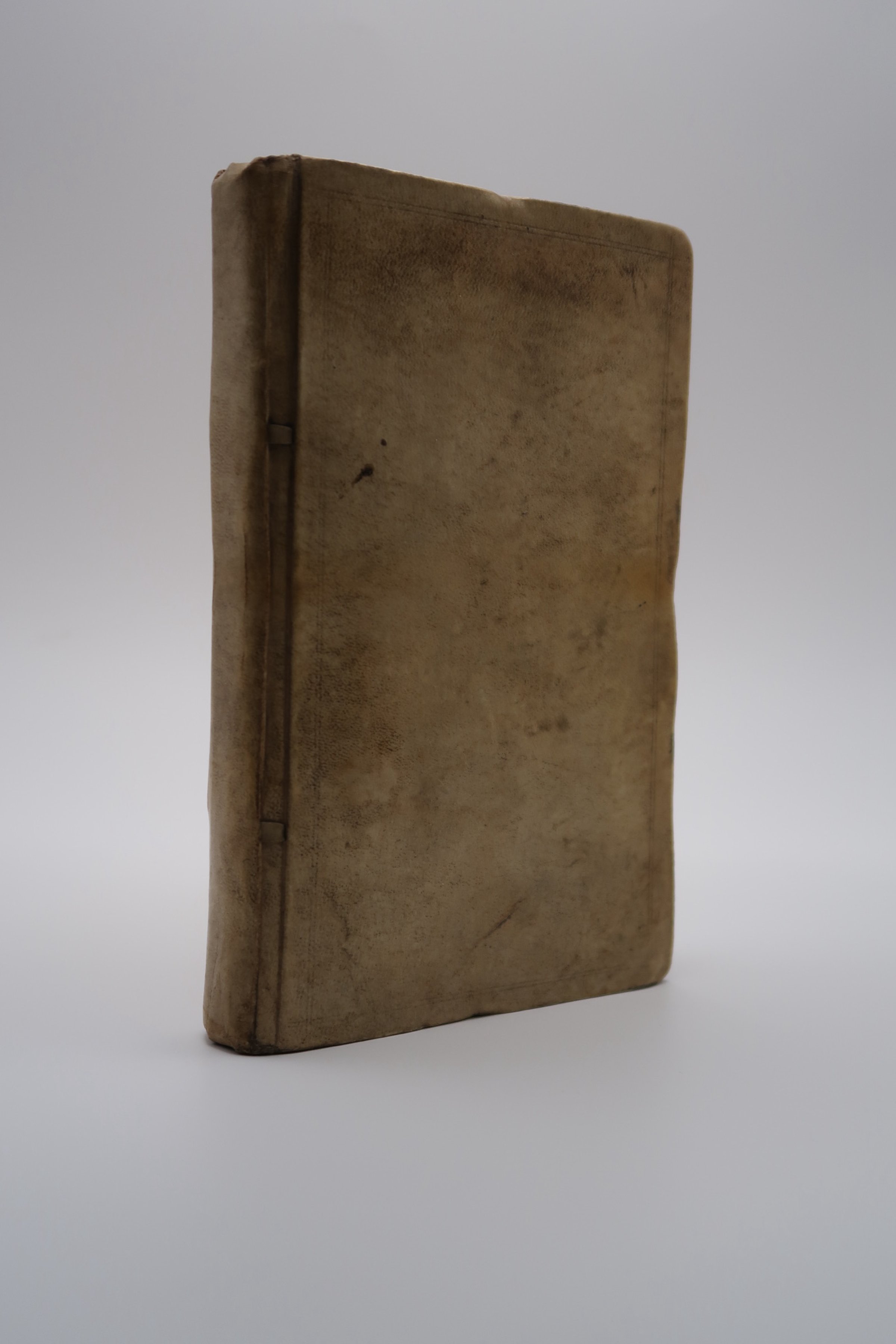 Image 1 of 7
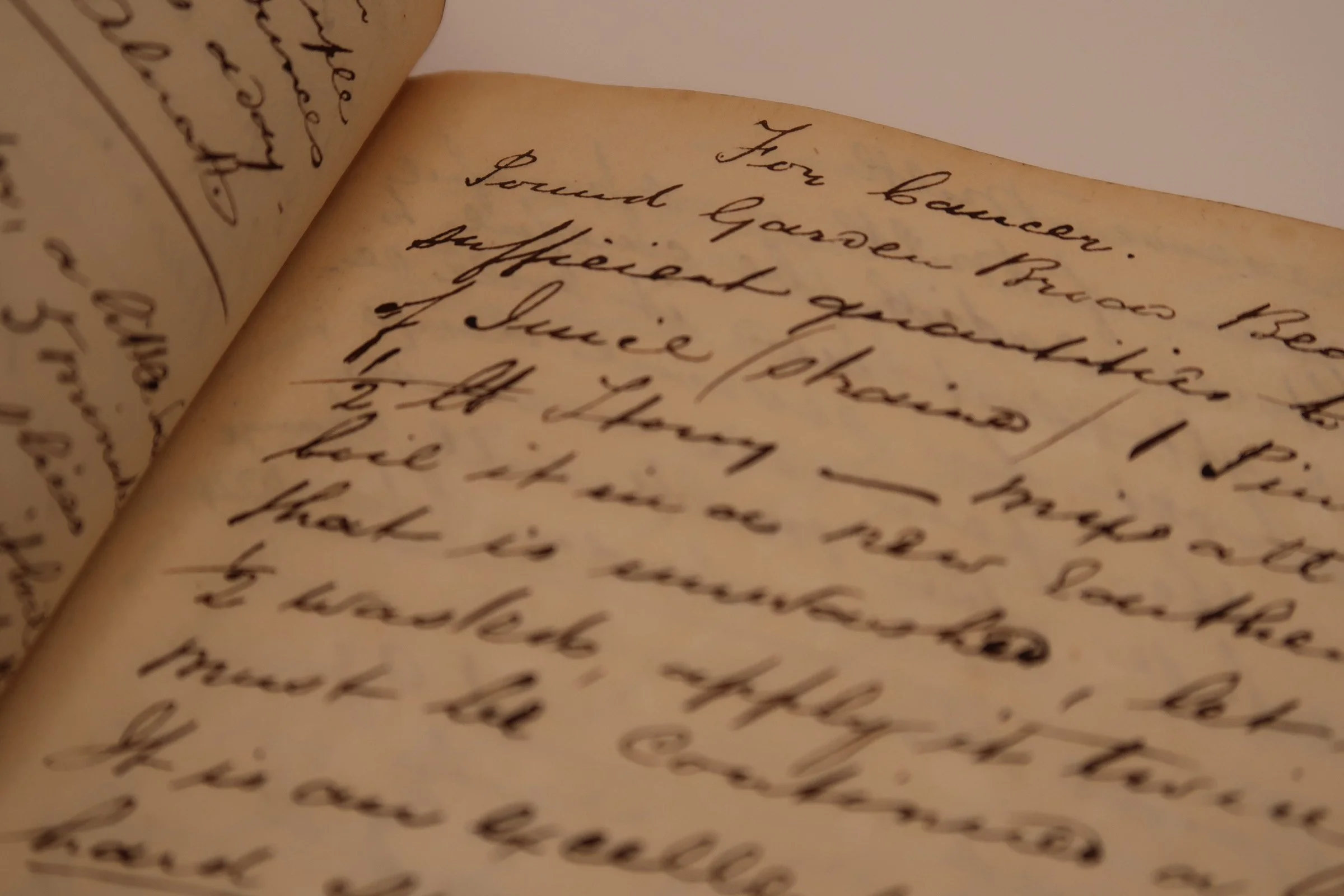 Image 2 of 7
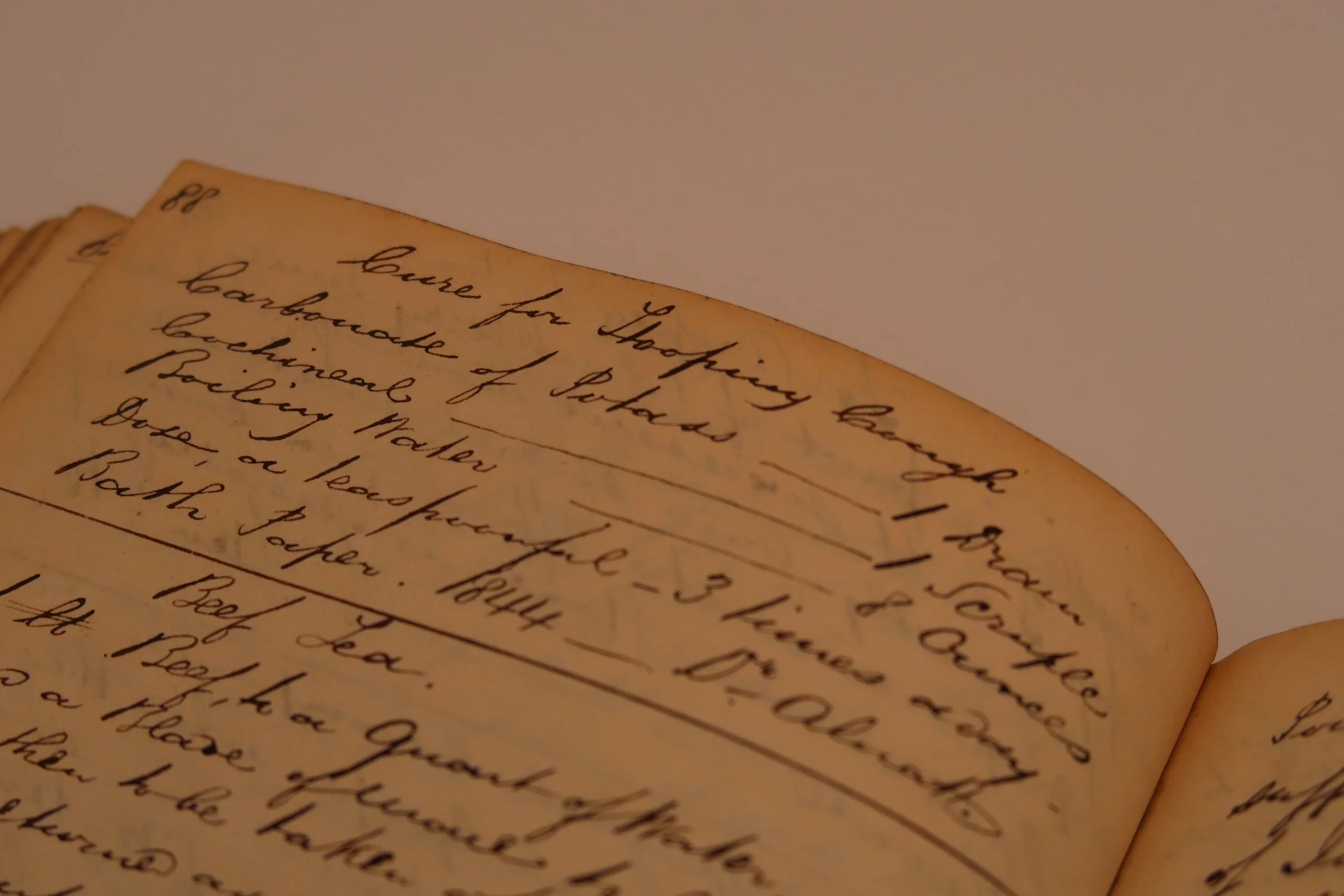 Image 3 of 7
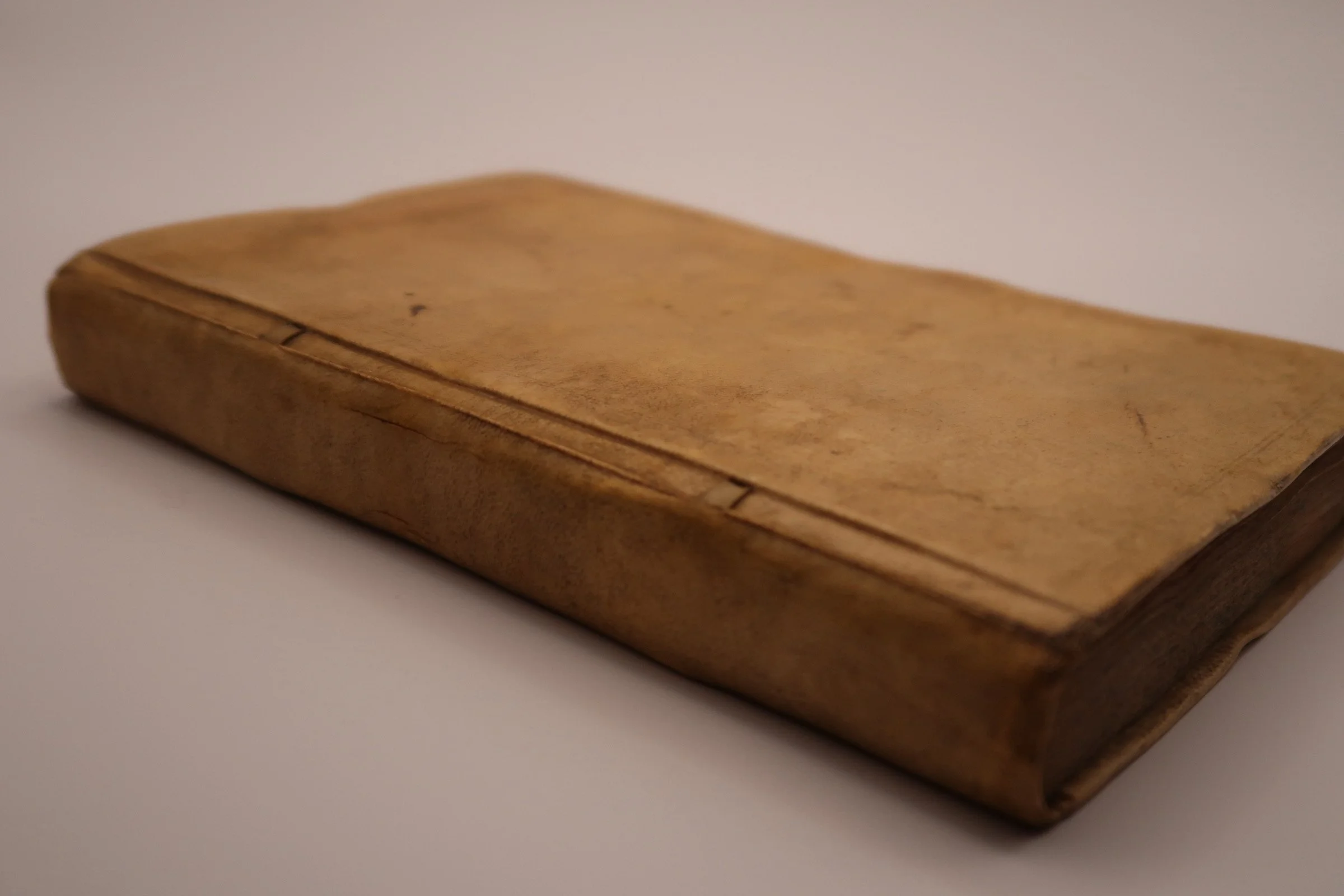 Image 4 of 7
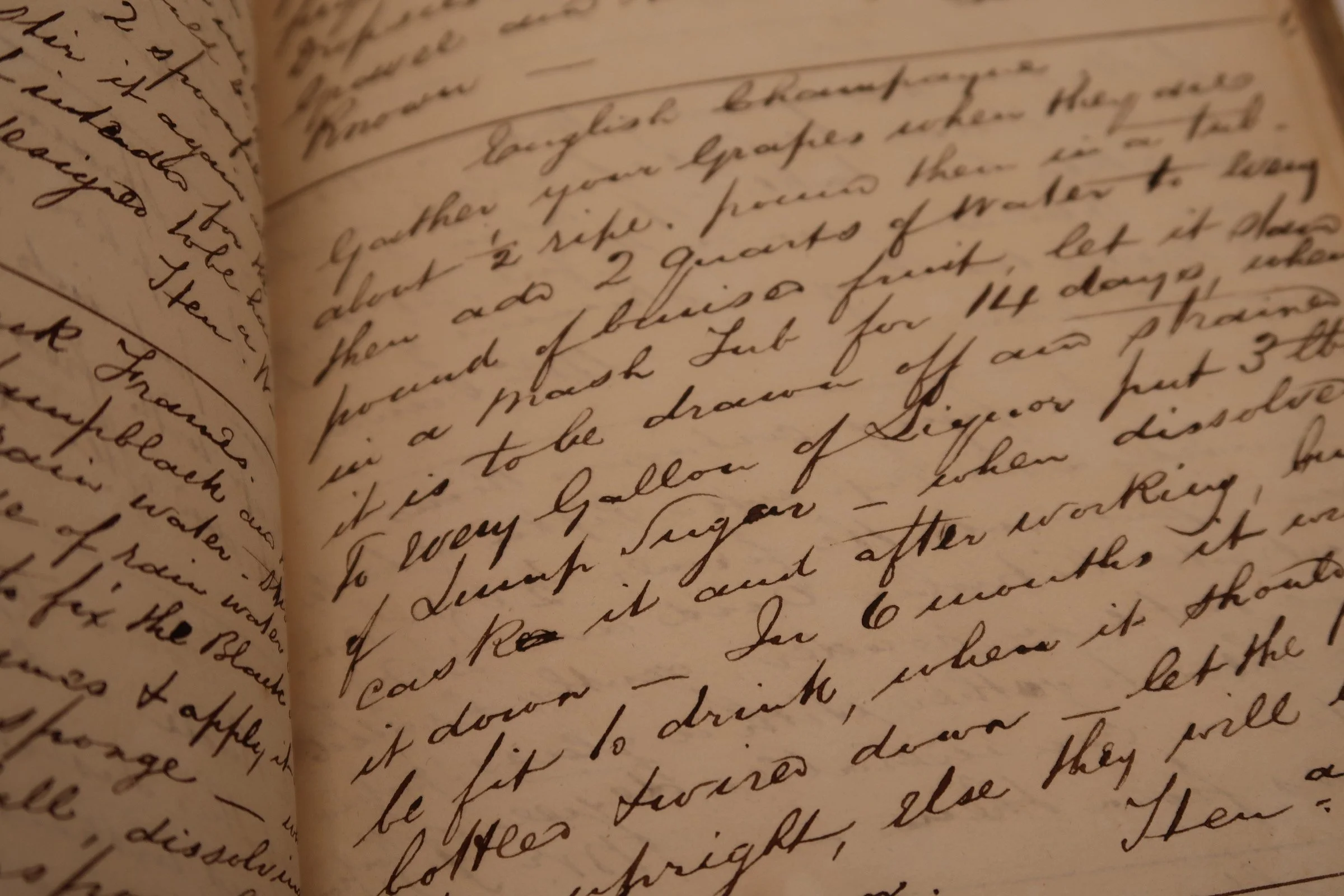 Image 5 of 7
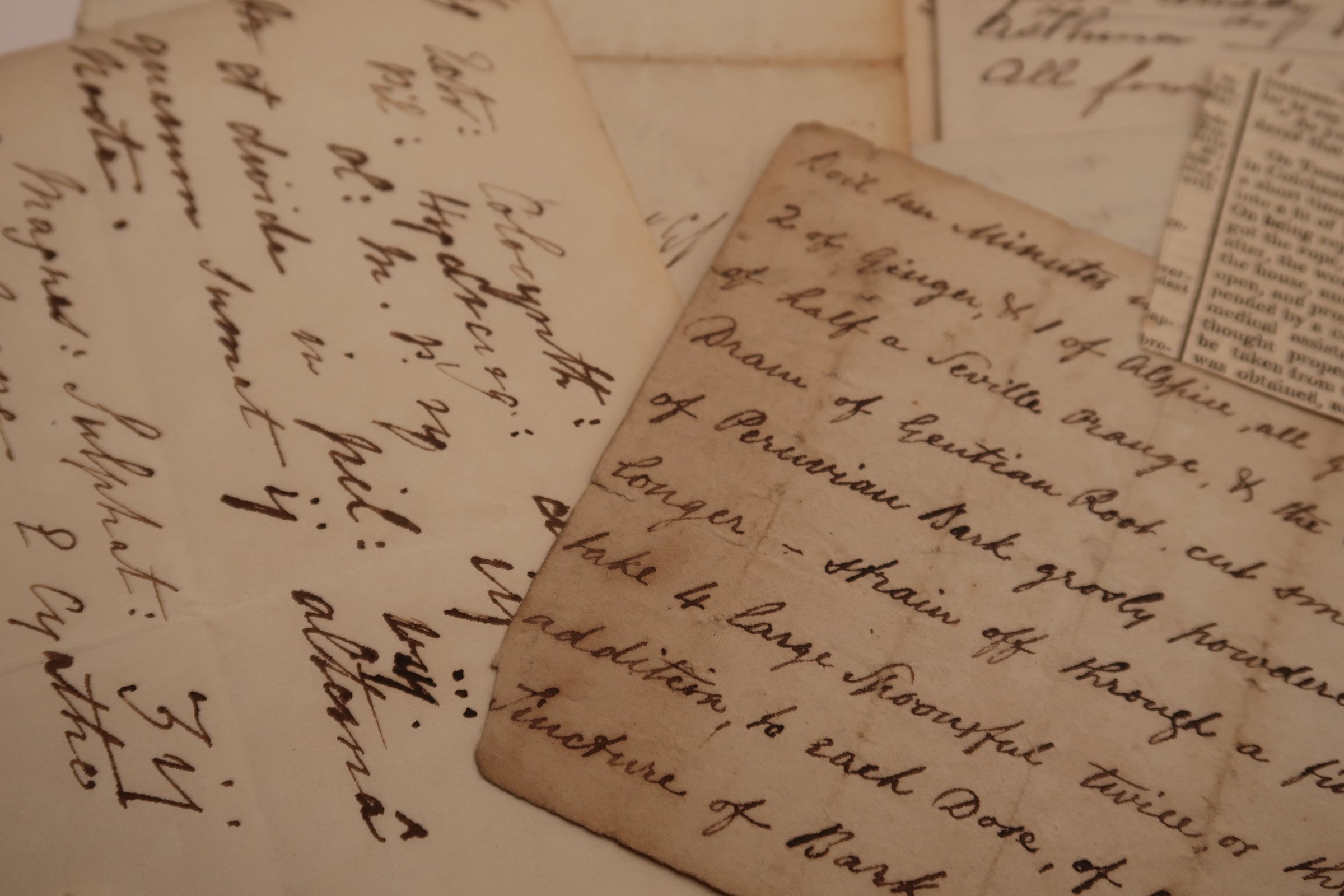 Image 6 of 7
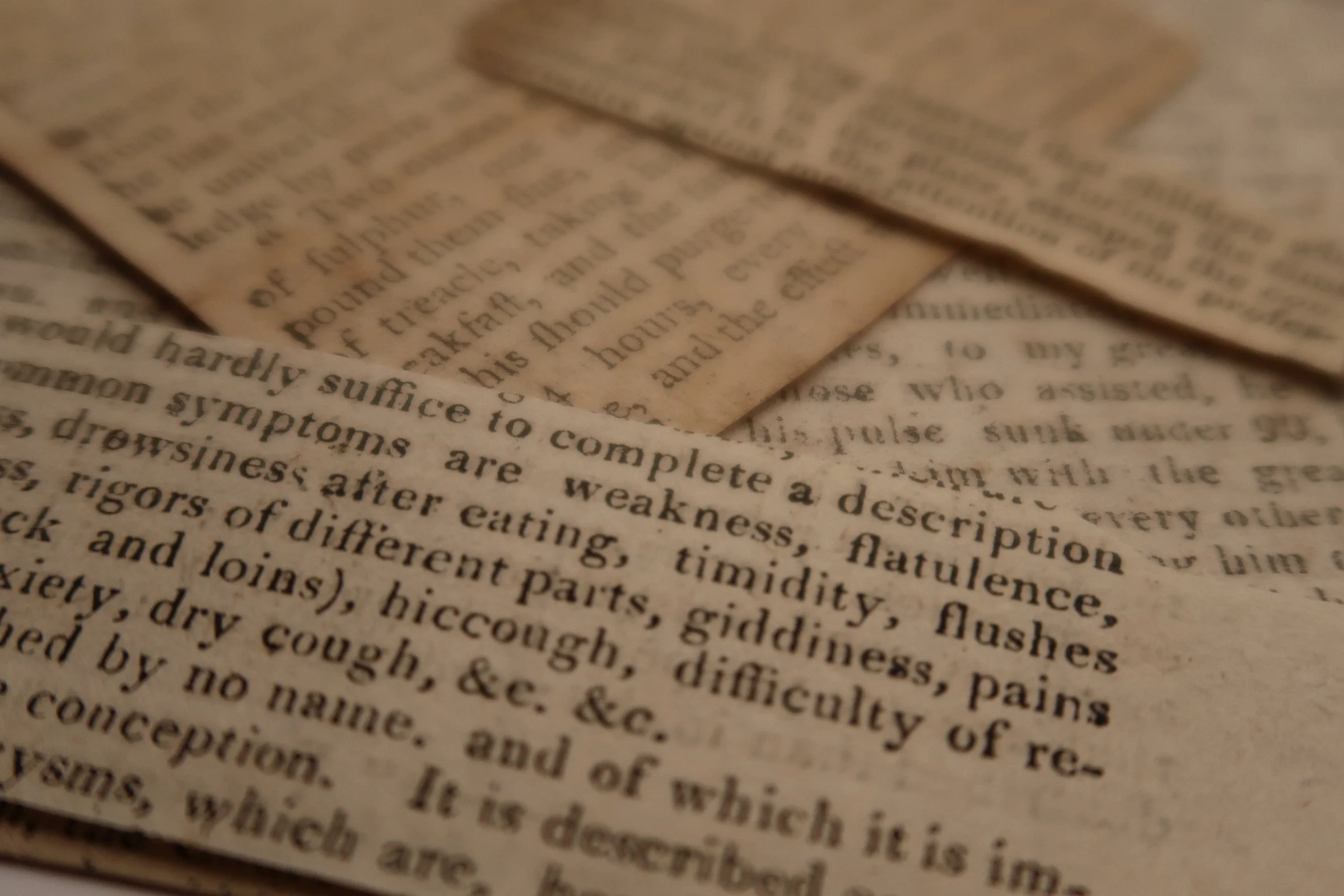 Image 7 of 7