
 Image 1 of 1
‘Less a work of film theory than a threat.’
JONG IL, Kim
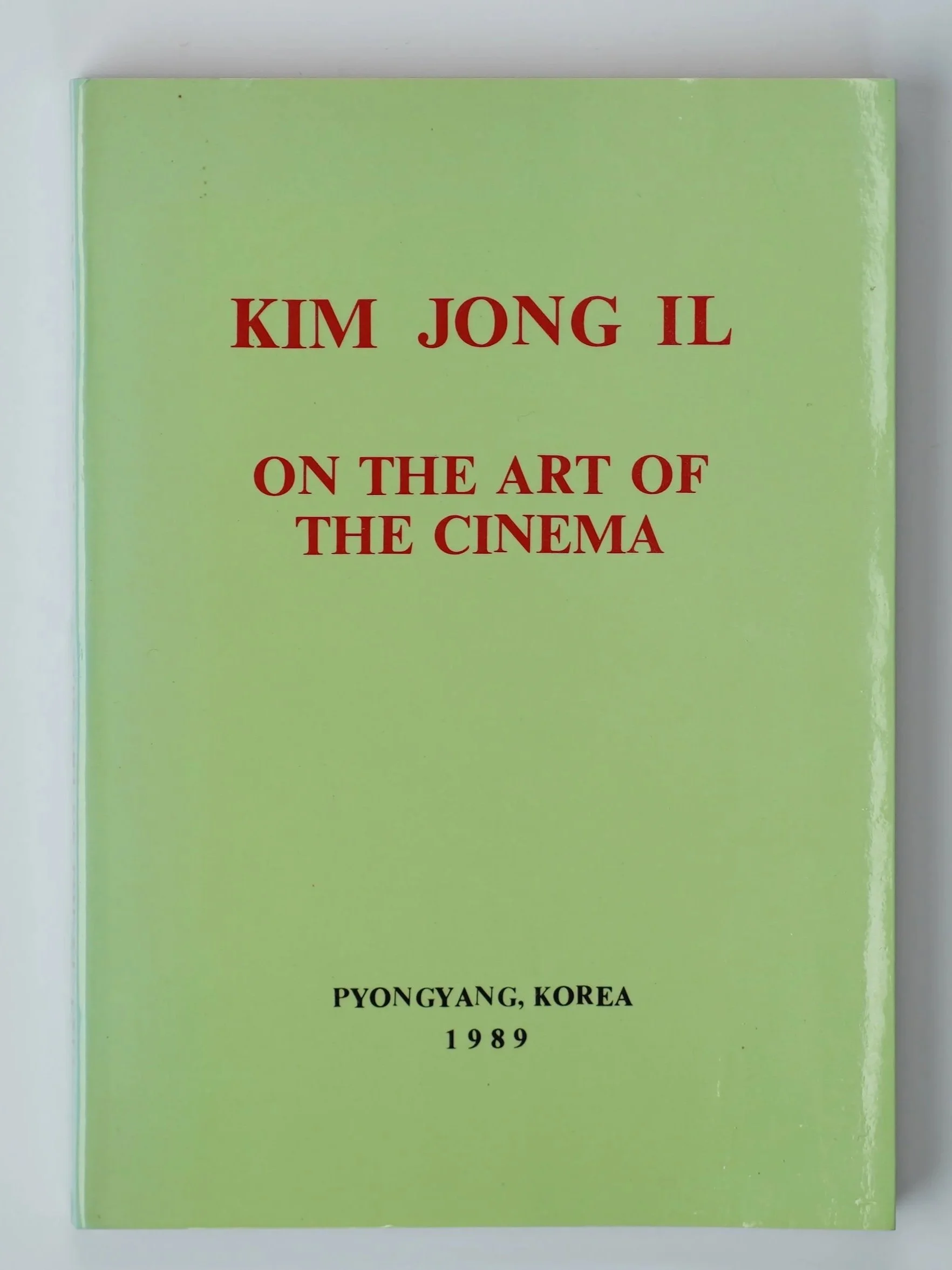
On the Art of the Cinema
Pyongyang: Foreign Languages Publishing House, 1989
8vo, pp. 329, 3pp. notes bound in at rear. Laminated green stiff paper wrappers, printed in red and black to front panel and red to spine. A fine, unread copy.
First English-language edition. First published in Korean in North Korea in 1973.
North Korea is not a normal country. On the Art of the Cinema is not a normal book. The first English-language edition was published in 1989 by the Foreign Languages Publishing House in Pyongyang. The imprint was (and is) under the control of the Propaganda and Agitation Department of North Korea’s central government, and co-ordinates with the Korean Workers’ Party Organisation and Guidance Department to control and censor all journalism, all broadcasting and all cultural life in North Korea.
Alive to the propaganda value of film, Kim devoted much time and effort to livening up the North Korean movie scene. To this end, and in an unorthodox bit of talent procurement, in 1978 Kim had South Korea’s leading film director Shin Sang-ok and his wife, actress Choe Eun-hui, kidnapped in Hong Kong, wrapped in plastic sheeting, and brought to Pyongyang. There they were sent to separate prisons for four years for deprogramming, and were only reunited when they were taken from prison, dressed in evening wear, and ushered into a government reception at which they were invited to make films for the glory of North Korea. The most famous of the seven films they made while enslaved and held under house arrest is Pulgasari, a Communist version of Godzilla in which Godzilla is reimagined as a metaphor for the decadence of the Western capitalist system. (The couple escaped in 1986.)
In On the Art of the Cinema Kim’s philosophy of film commutes between the commonplace and the demented. His grasp of what an actor does, for example, seems shaky: ‘When the actor knows 10 elements of truth, he should express three or four. If he only knows three or four but tries to express 10, he is like someone drawing a puppy when he intended to draw a tiger.’ (Complete gibberish, of course, but in fairness to Kim there are directors who say things like this.)
We have been unable to establish the size of this edition, but copies are extremely rare: JISC Library Hub finds no copy held in any UK institution, and WorldCat is equally silent.
‘Less a work of film theory than a threat.’
JONG IL, Kim
On the Art of the Cinema
Pyongyang: Foreign Languages Publishing House, 1989
8vo, pp. 329, 3pp. notes bound in at rear. Laminated green stiff paper wrappers, printed in red and black to front panel and red to spine. A fine, unread copy.
First English-language edition. First published in Korean in North Korea in 1973.
North Korea is not a normal country. On the Art of the Cinema is not a normal book. The first English-language edition was published in 1989 by the Foreign Languages Publishing House in Pyongyang. The imprint was (and is) under the control of the Propaganda and Agitation Department of North Korea’s central government, and co-ordinates with the Korean Workers’ Party Organisation and Guidance Department to control and censor all journalism, all broadcasting and all cultural life in North Korea.
Alive to the propaganda value of film, Kim devoted much time and effort to livening up the North Korean movie scene. To this end, and in an unorthodox bit of talent procurement, in 1978 Kim had South Korea’s leading film director Shin Sang-ok and his wife, actress Choe Eun-hui, kidnapped in Hong Kong, wrapped in plastic sheeting, and brought to Pyongyang. There they were sent to separate prisons for four years for deprogramming, and were only reunited when they were taken from prison, dressed in evening wear, and ushered into a government reception at which they were invited to make films for the glory of North Korea. The most famous of the seven films they made while enslaved and held under house arrest is Pulgasari, a Communist version of Godzilla in which Godzilla is reimagined as a metaphor for the decadence of the Western capitalist system. (The couple escaped in 1986.)
In On the Art of the Cinema Kim’s philosophy of film commutes between the commonplace and the demented. His grasp of what an actor does, for example, seems shaky: ‘When the actor knows 10 elements of truth, he should express three or four. If he only knows three or four but tries to express 10, he is like someone drawing a puppy when he intended to draw a tiger.’ (Complete gibberish, of course, but in fairness to Kim there are directors who say things like this.)
We have been unable to establish the size of this edition, but copies are extremely rare: JISC Library Hub finds no copy held in any UK institution, and WorldCat is equally silent.