
 Image 1 of 2
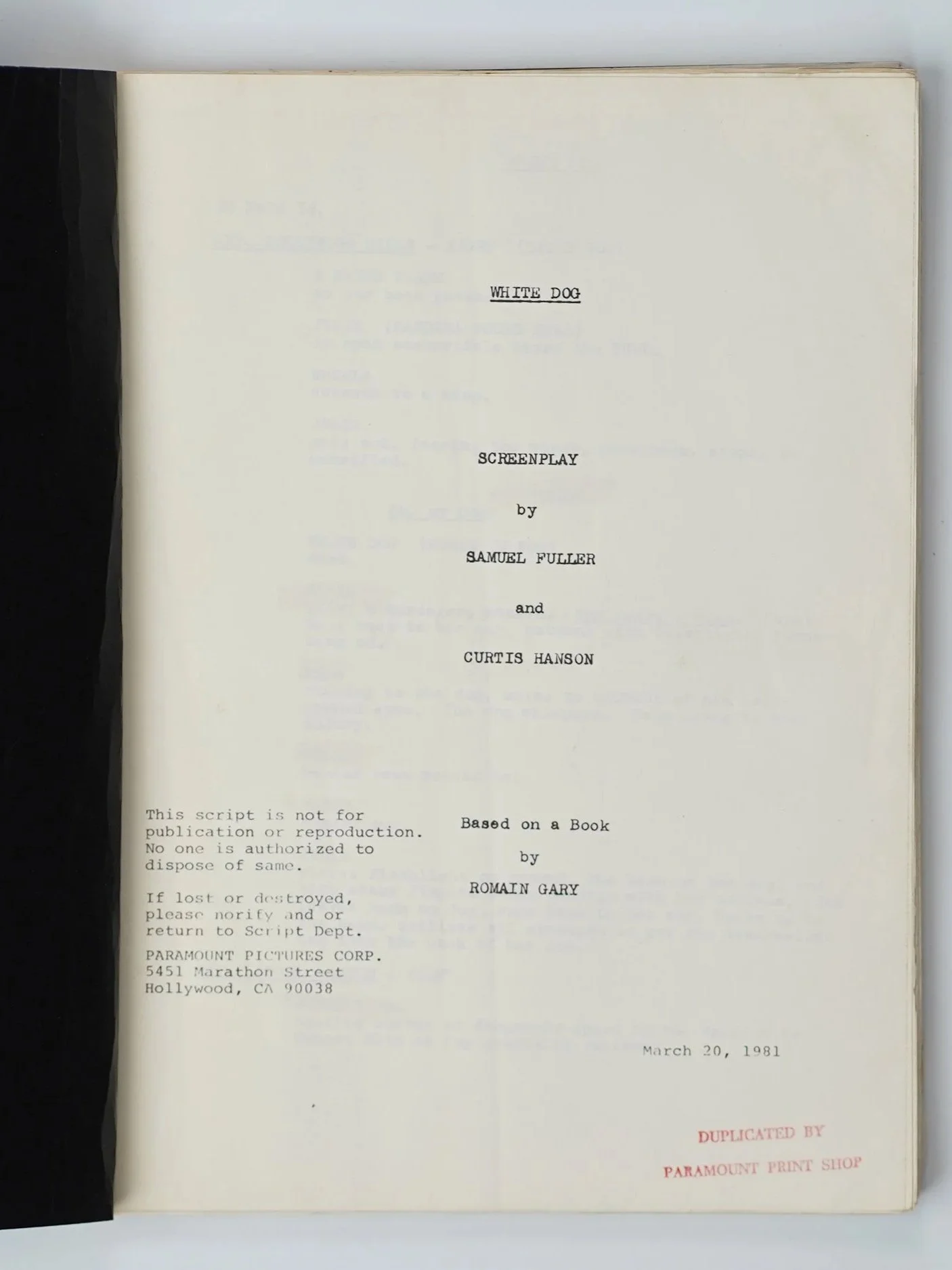 Image 2 of 2
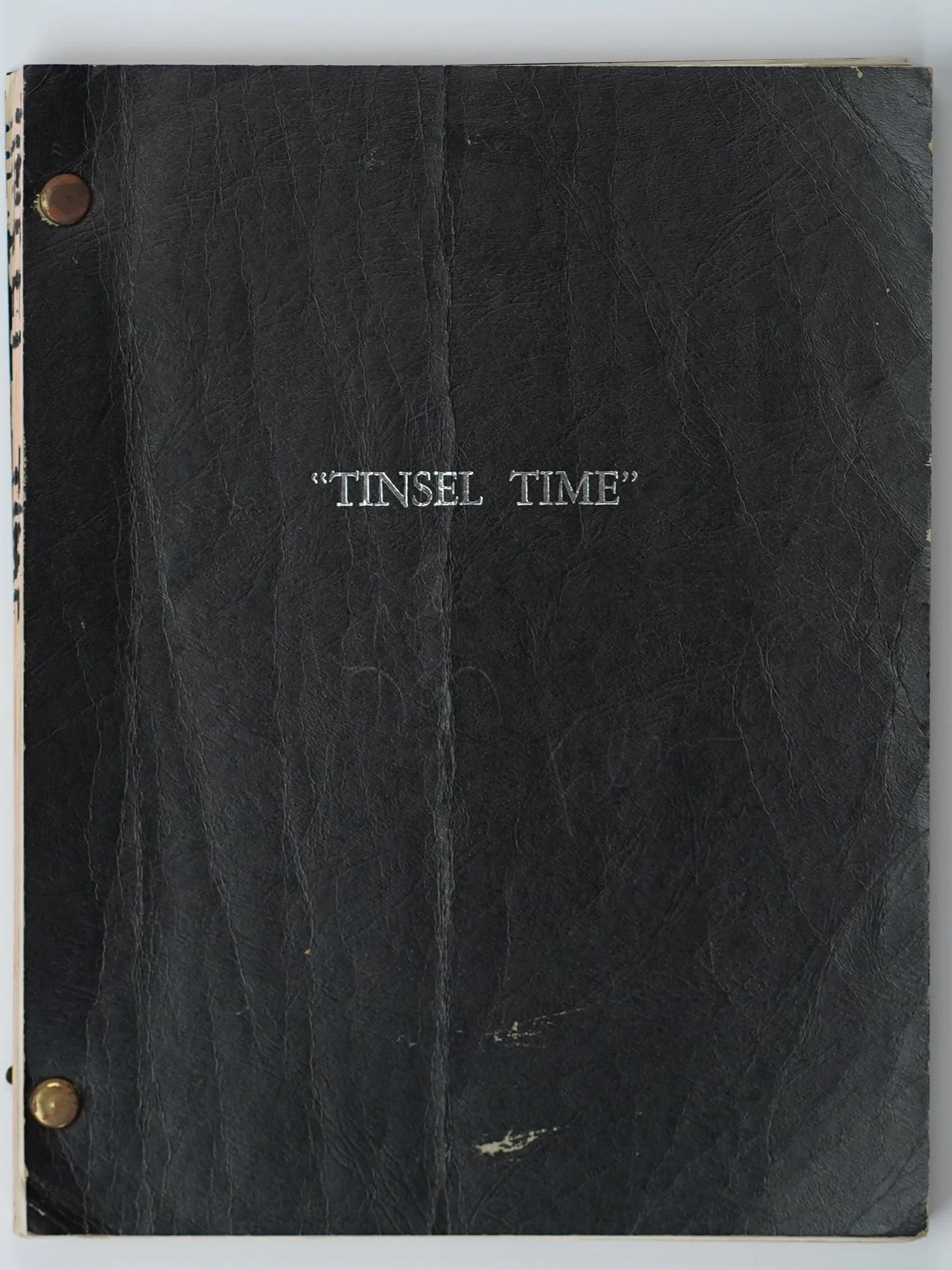
TINSEL TIME’....
[GARY, Romain] FULLER, Samuel and HANSON, Curtis
White Dog
Hollywood: Paramount Pictures Corp., 1981
117 variegated mimeographed pp., bound in black stiff paper wrappers secured with two split pins to left edge. Fake title (TINSEL TIME) in silver to front wrapper and inked to spine. ‘DUPLICATED BY PARAMOUNT PRINT SHOP’ stamped in red to title page. Vertical crease to front wrapper, some light general wear from use in production, but a very well preserved copy.
Screenplay for White Dog, with variously coloured pages bound in. LEADING ACTOR KRISTY McNICHOL’S WORKING COPY, WITH HER CHARACTER’S NAME (‘JULIE’) HIGHLIGHTED AT EVERY LINE.
They really don’t make them like this anymore — and in 1981, Paramount was sorry it had made this one. Not for the usual reasons -- White Dog was, and remains, a singular, electrifying, and highly responsible film. But it’s also a film about a dog which has been trained to attack and kill black people, and, not unreasonably, Paramount saw problems ahead.
Romain Gary’s novel Chien Blanc was published in France in 1970, and as White Dog in the US later the same year. The book was optioned by Paramount in 1975, and Roman Polanski was hired to direct. But when charges of statutory rape were brought against Polanski, he fled the US, and the project went into limbo until 1981, when Don Simpson, then Chief of Production at Paramount, visited the director Sam Fuller at his home to gauge his interest in the project. The 70-year- old Fuller -- war hero, lifelong anti-racist activist, friend of Romain Gary and pre-eminent Hollywood maverick -- pitched Simpson his vision for the entire film, acting out key scenes as he went, and was promptly hired. Later, in an interview with the New York Times, Simpson said: ‘I should have thrown my body over barbed wire to stop White Dog from being made.’
Fuller’s responsible treatment of the material notwithstanding, Paramount feared a public backlash to White Dog and a boycott of the studio. And with good reason: civil rights groups, apparently unable to tell the difference between a film about racism and a racist film, launched protest campaigns even before shooting began. (To throw protestors off the scent, front wrappers of production copies of the screenplay, including this one, carry
the title Tinsel Time.) When Fuller delivered White Dog, on time, on budget and on message, Paramount showed it for a week in Detroit and then shelved it.
Although the film was released without incident and to great acclaim in Europe, White Dog had to wait until 2008 for a US home release.
The lead role of Julie, the young actress who befriends the dog and seeks help to train the racism out of him, was played by Kristy McNicol, whose copy this was. Her line entries are highlighted throughout the text.
A highly important film, in clandestine wrappers, which grapples with the question if racist thought can be deprogrammed.
TINSEL TIME’....
[GARY, Romain] FULLER, Samuel and HANSON, Curtis
White Dog
Hollywood: Paramount Pictures Corp., 1981
117 variegated mimeographed pp., bound in black stiff paper wrappers secured with two split pins to left edge. Fake title (TINSEL TIME) in silver to front wrapper and inked to spine. ‘DUPLICATED BY PARAMOUNT PRINT SHOP’ stamped in red to title page. Vertical crease to front wrapper, some light general wear from use in production, but a very well preserved copy.
Screenplay for White Dog, with variously coloured pages bound in. LEADING ACTOR KRISTY McNICHOL’S WORKING COPY, WITH HER CHARACTER’S NAME (‘JULIE’) HIGHLIGHTED AT EVERY LINE.
They really don’t make them like this anymore — and in 1981, Paramount was sorry it had made this one. Not for the usual reasons -- White Dog was, and remains, a singular, electrifying, and highly responsible film. But it’s also a film about a dog which has been trained to attack and kill black people, and, not unreasonably, Paramount saw problems ahead.
Romain Gary’s novel Chien Blanc was published in France in 1970, and as White Dog in the US later the same year. The book was optioned by Paramount in 1975, and Roman Polanski was hired to direct. But when charges of statutory rape were brought against Polanski, he fled the US, and the project went into limbo until 1981, when Don Simpson, then Chief of Production at Paramount, visited the director Sam Fuller at his home to gauge his interest in the project. The 70-year- old Fuller -- war hero, lifelong anti-racist activist, friend of Romain Gary and pre-eminent Hollywood maverick -- pitched Simpson his vision for the entire film, acting out key scenes as he went, and was promptly hired. Later, in an interview with the New York Times, Simpson said: ‘I should have thrown my body over barbed wire to stop White Dog from being made.’
Fuller’s responsible treatment of the material notwithstanding, Paramount feared a public backlash to White Dog and a boycott of the studio. And with good reason: civil rights groups, apparently unable to tell the difference between a film about racism and a racist film, launched protest campaigns even before shooting began. (To throw protestors off the scent, front wrappers of production copies of the screenplay, including this one, carry
the title Tinsel Time.) When Fuller delivered White Dog, on time, on budget and on message, Paramount showed it for a week in Detroit and then shelved it.
Although the film was released without incident and to great acclaim in Europe, White Dog had to wait until 2008 for a US home release.
The lead role of Julie, the young actress who befriends the dog and seeks help to train the racism out of him, was played by Kristy McNicol, whose copy this was. Her line entries are highlighted throughout the text.
A highly important film, in clandestine wrappers, which grapples with the question if racist thought can be deprogrammed.